My First URBACT Experience: Inclusive Design for Active Mobility

I was thrilled to contribute as an ad hoc expert on inclusive design for active mobility for the Beyond the Urban Network with URBACT. This experience was incredibly rewarding, as it focused on embedding inclusion and accessibility into both urban and rural mobility solutions.

The preparation for my presentation involved online meetings with the lead expert, where I gained valuable insights into the network’s priorities. This helped me tailor the presentation and workshop structure to address the specific needs of the participants. A strong emphasis was placed on accessibility challenges faced by people with disabilities and how inclusive design can bridge these gaps.

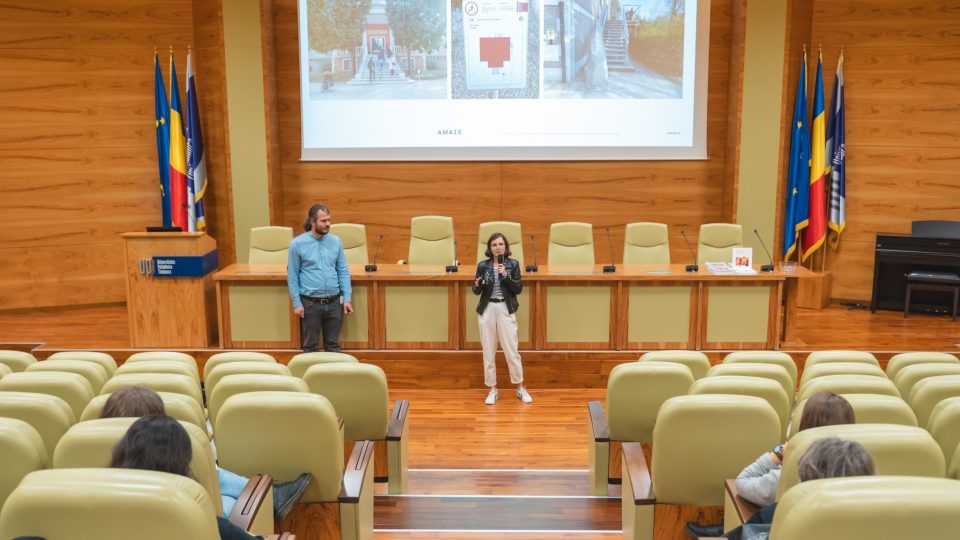
To enrich the workshop experience, I invited two guests with mobility and visual impairments to share their personal experiences of navigating inaccessible public spaces and transport systems. Their stories were powerful, highlighting the real-life obstacles they face daily and the pivotal role cars play due to a lack of accessible alternatives. Their testimonies deeply resonated with participants, sparking a more engaged and insightful discussion than anticipated.

Although we didn’t have time to complete the accessibility analysis during the workshop, we collectively decided to continue the discussion individually. This gave participants additional time to reflect on the challenges shared and develop practical solutions tailored to their contexts.

As part of this effort, I also drafted an article, “Turning Accessibility and Inclusion into Measurable Factors in Active Mobility”

The article provides context on accessibility considerations, practical examples of overcoming barriers, and actionable insights to inspire URBACT networks to foster inclusive mobility solutions.

This experience has been deeply inspiring, and I’m grateful to URBACT for the opportunity to collaborate on such meaningful work. The feedback from the workshop and the article will play a foundational role in supporting the network’s continued efforts toward accessibility and inclusion in mobility.

Iris and her two guesta presenting with th eprojected images on the wall.
Consultations on the development of an inclusive disaster response training course.

@ The World Bank in Bucharest.

Through this initiative, the World Bank team supports the efforts of the Department for Emergency Situations (DSU) and the General Inspectorate for Emergency Situations (IGSU) in preparing people with disabilities for disaster situations. The goal is to develop an inclusive course to help individuals with disabilities identify their needs in case of a disaster and create customized safety strategies for the emergency teams.

I was invited to represent AMAIS and to discuss accessibility requirements for the built environment in disaster situations. My primary focus was on prevention, specifically exploring ways for authorities to place greater emphasis on accessibility when issuing operating permits.

people with and without disabilities sitting around a table.
Graduated from the Social Innovation and Management Programme @ NGO Academy in Vienna

Throughout the three modules in Vienna, we explored essential topics for improving leadership skills such as project management, impact assessment, fundraising, design thinking, and social media. The programme is organised by ERSTE Foundation and Vienna University of Economics and Business.

1723708978470
Guest presenter @ Architecture for Inclusion, YA Academy

Contribution: my professional experience at AMAIS, the Empathy Retreat and my views on how to improve the accessibility of the built environment while changing the architects’ mentalities on the topic. The presentation was part of prof. dr. arch. Silvia Berselli’s class CASE HISTORY, Examples and good practices of accessible architecture.

Speaker @ Festival For Architecture School of Tomorrow STUDENTS SLOT – TALKS

Contribution: presentation on inclusive design, empathy exercises and book launch “Design Incluziv: Exerciții de empatie în proiectare”. I have also invited for this talk, my colleague, Alex Cucu, who is one of the 7 blind active IT engineers in Romania.

https://fast.oar.archi/2023/

Me and Alex on stage presenting.
Workshop Leader @ ID Forum 2023, SALTO

SALTO-YOUTH stands for Support, Advanced Learning and Training Opportunities for Youth. It works within the Erasmus+ Youth and the European Solidarity Corps programmes. It is a network of seven Resource Centres working on European priority areas within the youth field.

As part of the European Commission’s Training Strategy, SALTO-YOUTH provides non-formal learning resources for youth workers and youth leaders and organises training and contact-making activities to support organisations and National Agencies (NAs) within the frame of the European Commission’s Erasmus+ Youth programme, the European Solidarity Corps, and beyond.

For the ID Forum 2023 I was invited to organise and facilitate a workshop: Empathy Retreat – Inclusive Dialogue: Using the Empathy Retreat as an instrument to take the first steps into inclusive design process – understanding exclusion.

https://2023idforum.salto-youth.net/contributors.html